Tassili n’Ajjer National Park: A Guide to Algeria’s Breathtaking Sahara Wilderness
One of the largest protected areas in the Sahara, home to 600-metre red dunes, 8,000-year-old rock art, and Tuareg nomads who still live as their ancestors did – here’s what you need to know about visiting Tassili n’Ajjer National Park and its most spectacular corner, the Tadrart Rouge.
What is Tassili n’Ajjer National Park?
Tassili n’Ajjer National Park is a vast plateau and mountain range in south-eastern Algeria, covering roughly 72,000 square kilometres across Illizi and Djanet Provinces, close to the borders with Libya, Niger, and Mali. The name translates loosely to “plateau of rivers,” a reminder that this now bone-dry stretch of the Sahara was once green and well-watered. The Algerian government designated the area a national park in 1972, and UNESCO inscribed Tassili n’Ajjer as a mixed cultural and natural World Heritage Site in 1982 – recognised both for its geology and for holding one of the largest and most significant collections of prehistoric rock art anywhere in the world.
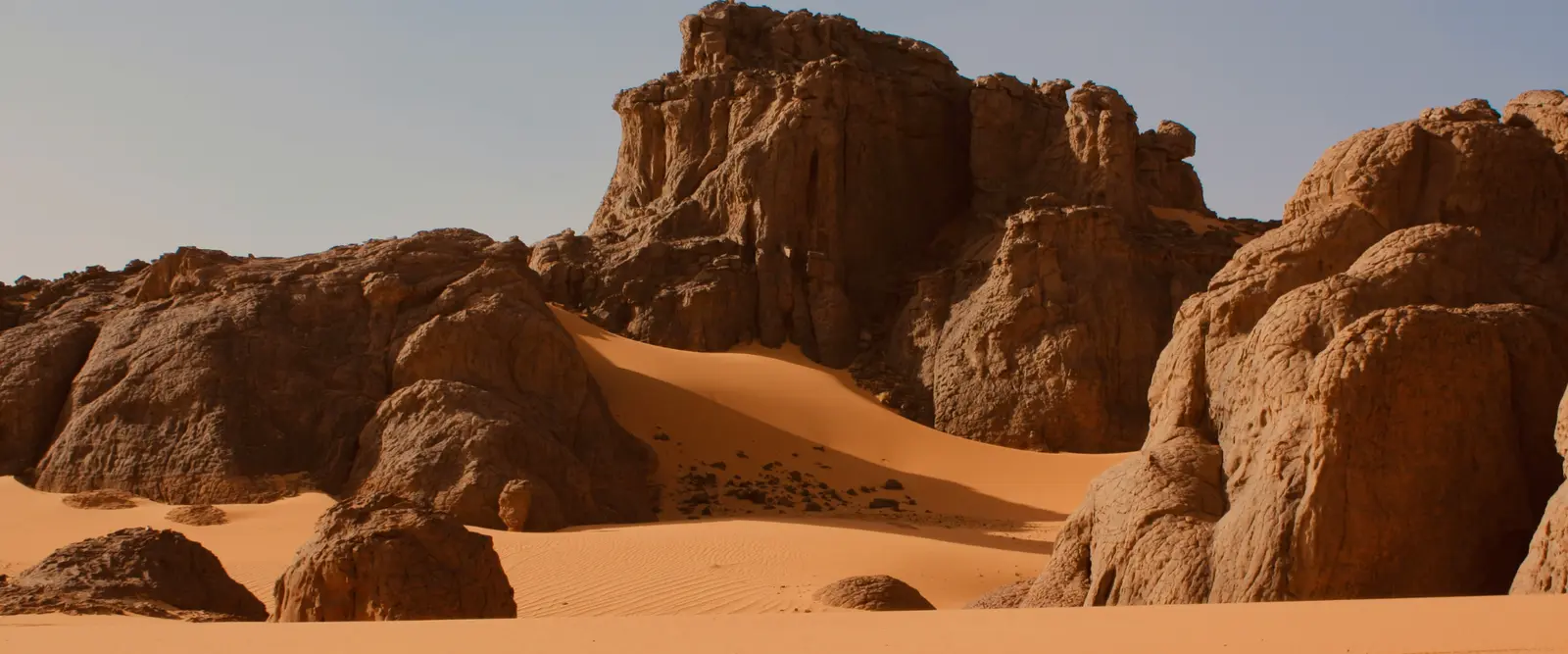
Within this enormous national park lies the Tadrart Rouge, a red sandstone region in the park’s southern reaches that has become the classic route for travellers wanting to experience Tassili n’Ajjer in depth – towering dune fields, wind-carved rock forests, hidden canyons, and some of the park’s best-preserved Neolithic paintings and engravings, all reachable on a single well-planned expedition.
Where is Tassili n’Ajjer National Park, and how do you get there?
Tassili n’Ajjer National Park sits in Algeria’s far south-east, roughly 2,000 km from the capital, Algiers. The main gateway to the park is Djanet, a small desert town in Illizi Province and the starting point for almost every organised expedition into the Tadrart Rouge and the wider Tassili plateau. There is no practical way to reach the national park independently by road from northern Algeria, you can arrive via a domestic flight from Algiers to Djanet, followed by 4×4 transport into the park with a local guide. Most domestic flights are operated by Air Algerie – the national flag carrier of Algeria. We at Omaya Travel have included the domestic flights in our package tour, as it might be difficult to purchase them from outside Algeria. It’s recommend to secure the domestic flights as early as possible especially in peak travel season.
Important: Independent travel in this national park isn’t really possible, and isn’t advisable even if it were. Permits, checkpoints, navigation, and water logistics all require a local team who knows the terrain. This is one of the main reasons Tassili n’Ajjer is best experienced as part of an organised expedition rather than a self-planned trip.
How old is Tassili n’Ajjer National Park, and what does its rock art show?
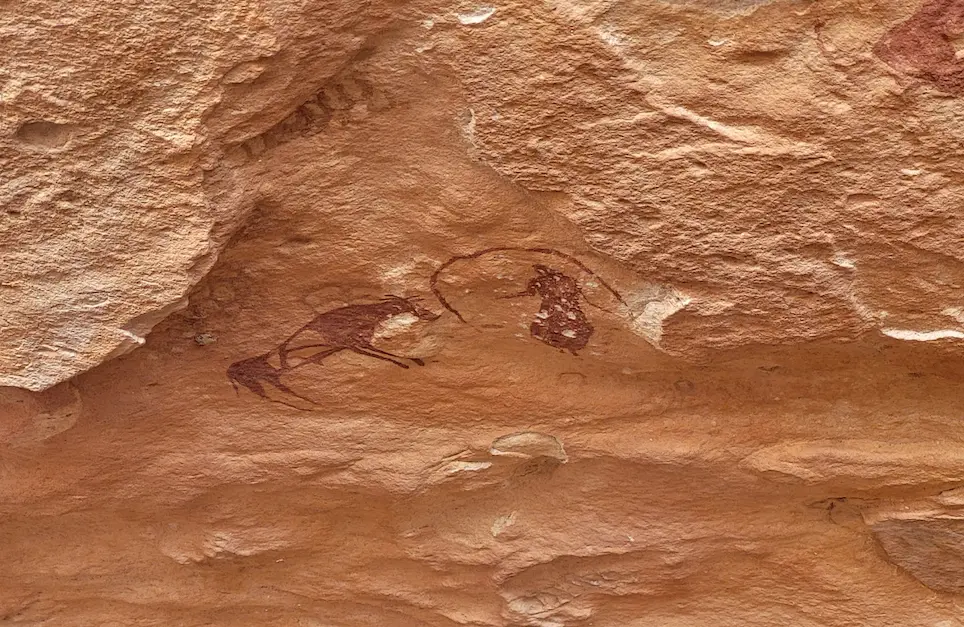
The paintings and engravings scattered across Tassili n’Ajjer National Park form one of the largest open-air galleries of prehistoric art anywhere in the world, with more than 15,000 engravings identified to date across the wider park. They date from a period when this part of the Sahara was green and well-watered, home to cattle herders, giraffes, and elephants rather than sand and stone. Within the Tadrart Rouge specifically, the Neolithic Ox paintings at Wan Iska and the Crying Cow engravings near Tini are considered among the finest examples anywhere in the park – their ochre pigments and fine detail have survived for roughly six thousand years thanks to the region’s extremely dry air.
Is Tassili n’Ajjer National Park safe to visit?
Southern Algeria’s desert tourism is concentrated in and around Djanet and the national park itself, and trips here are run in coordination with local Tuareg guides who know the checkpoints, permits, and terrain. As with any remote region, conditions can change, so it’s worth checking your government’s current travel advisory before booking.
Important: This is not a national park to attempt independently. Tourism here is strictly controlled, and visitors are required to travel with an official guide. Reputable operators also bring their own representative and an experienced local team throughout, which is the safest and most practical way to see the Tadrart Rouge and the wider park.
When is the best time to do the Algeria Tassili Trip?
Tassili n’Ajjer is a summer-to-avoid destination – daytime temperatures in June, July, and August regularly become dangerous for trekking and camping in the park. The best window is late autumn through early spring, roughly October to March, when days are warm and manageable and nights are cold but bearable with the right gear.
Do I need a visa?
For most nationalities, it’s possible to get visa on arrival to visit the south and do the Tassili expedition. To receive the visa, you need a letter of invitation from a local travel companies. Most local operators provide it as part of the travel package. It’s important to allow enough time (at least two month) for your local team to prepare all documents for you.
Important: visa rules might change frequently and might vary depending on your nationality, so it’s important to always check the latest conditions before travelling.
What does a Tadrart Rouge route through the park look like?
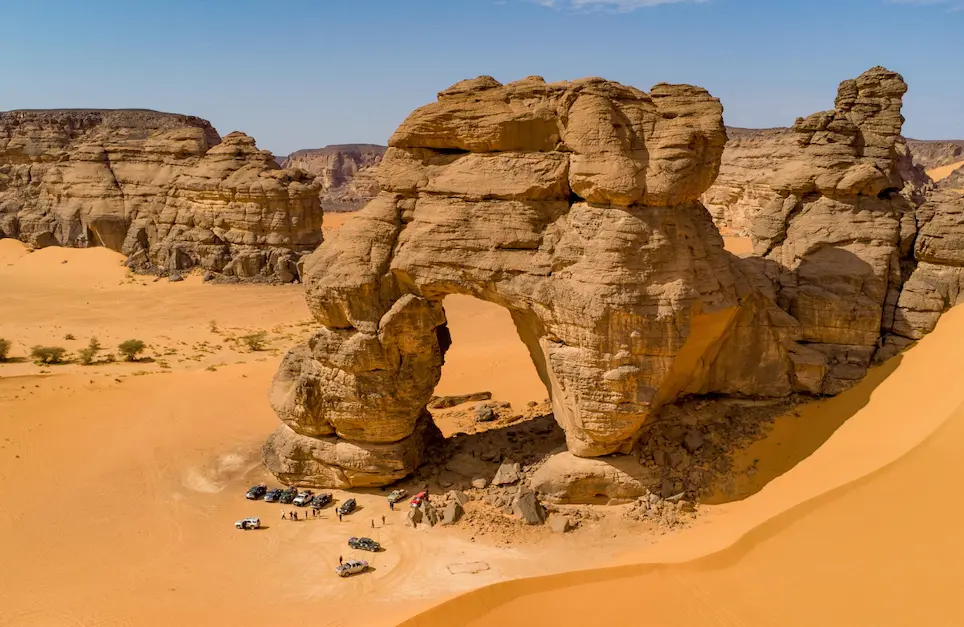
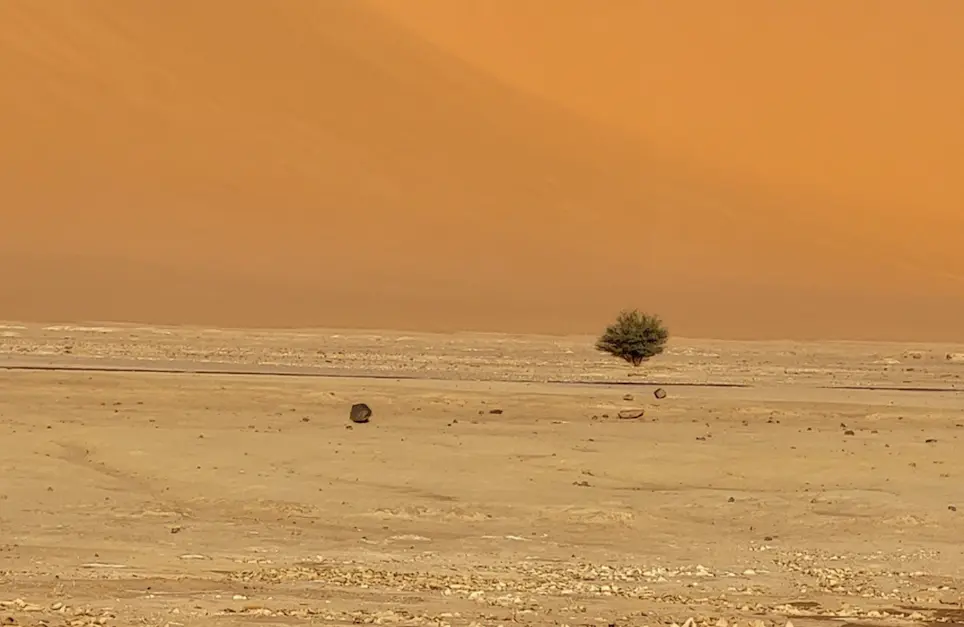
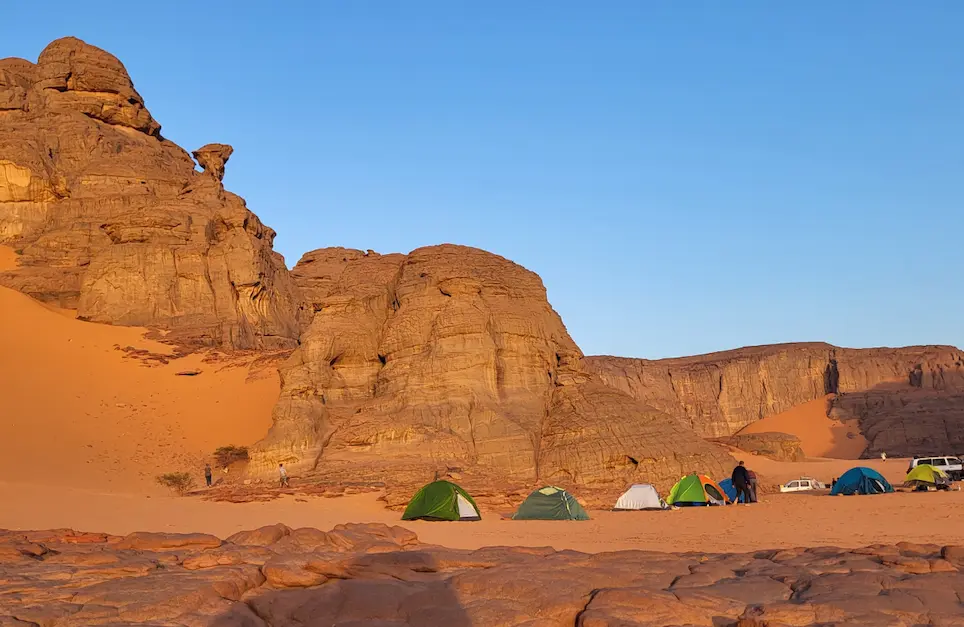
A journey through the Tadrart Rouge in the Algerian Sahara moves through a striking range of terrain within just a few days – towering dune fields that shift colour through the day, black sand plains, wind-carved rock forests and natural arches, hidden canyons sheltering rare greenery, and open plateau where ancient rock art survives on canyon walls. Camp is typically moved to a new location most evenings as the route progresses deeper into the park, giving each day a genuinely different landscape to wake up to.
Where do you sleep, how do you bring food and what are conditions like in the park?
Most nights inside Tassili n’Ajjer National Park are spent wild camping directly in the desert, with camp moved to a new location most evenings as the route through the Tadrart Rouge progresses. Wild camping here means no showers and basic toilet facilities for several consecutive nights. Most travellers find this is part of the appeal rather than a drawback – but it’s worth going in with realistic expectations if you’ve never desert-camped before. Meals are prepared by the local team throughout the trip using supplies brought in from Djanet, typically breakfast, lunch, and dinner each day while camping. Because the Tadrart has very limited resupply options once you’re away from Djanet, it’s worth flagging any dietary restrictions or allergies with your operator well ahead of departure so the team can plan accordingly.
Is there phone signal or WiFi in the desert?
No, and most travellers count this among the trip’s best features. Signal is unreliable to non-existent away from Djanet, so expect to be genuinely offline for several consecutive days while camping in the Tadrart. It’s worth letting family or colleagues know in advance not to expect contact during that stretch.
Will you meet Tuareg communities in the park?
Yes, and it’s one of the highlights of visiting Tassili n’Ajjer. Tuareg guides lead expeditions throughout the national park, and the route through Wadi Essendilène occasionally brings an encounter with a Tuareg nomad family still living a traditional, seasonal lifestyle in the canyon. Djanet’s Tuareg market, usually visited toward the end of the journey, offers an opportunity to discover the region’s traditional handicrafts, locally woven textiles, spices, food products, and gain a glimpse into everyday life in the oasis town.
How physically demanding is a Tassili n’Ajjer Desert Expedition?
This varies quite a bit depending on the route. Most travellers opt for 4×4-based expeditions (like the one we have at Omaya Travel), where the vehicle covers the bulk of the distance and you take short walks to reach rock art sites and viewpoints – longer hikes on these routes are usually optional extras rather than a requirement. For the regular 4×4-based routes, you don’t need a high fitness level. Still, a reasonable, general level of fitness and comfort with basic camping conditions is recommended. If you have specific health or mobility concerns, it’s worth checking directly with your tour operator before booking so they can point you to the route that suits you best. There are also local operators who organise hikes in more remote parts of the park that are only reachable entirely on foot, with donkeys supporting the gear; these routes can involve 5–6 hours of hiking a day and suit travellers who specifically want a more demanding, immersive trip. If you are interested in these kind of expeditions, we can organise it for you as well on request.
What else is worth knowing before you visit the park?
- Drones and photography: Photographing the landscapes, rock art, and camps is generally welcomed, but photography and drone use near checkpoints, military installations, or local communities can be sensitive. Always check with your guide before flying a drone or photographing people, and confirm Algeria’s current drone import rules before you travel.
- Currency and tipping: Bring cash, as card acceptance is very limited once you’re outside major cities. Tipping guides and drivers is customary and appreciated at the end of a desert expedition – ask your operator for local guidance on appropriate amounts.
- Extending your trip: Many travellers combine a Tassili n’Ajjer expedition with a few extra days in Algiers before or after, to see the capital’s Casbah, coastline, and museums while acclimatising or decompressing from the desert.
Omaya Travel’s Algeria Desert Expedition (Tadrart Rouge) covers the best of Tassili n’Ajjer National Park over 8 days, travelling with a dedicated local Tuareg team from the moment you land in Algiers to the moment you fly out. Find out more details here.