facebook
logo

Proin gravida nibh vel velit auctor aliquet. Aenean sollic itudin, lorem quis bibendum auctornisi elit consequat ipsum, nec nibh id elit. Lorem ipsum dolor.

Latest Posts
Top
Image Alt

Morocco – Blue Cities & Golden Dunes

Morocco – Blue Cities & Golden Dunes

EUR2300 per person
12 Days / 11 Nights

Available dates : 01 October 2026 | 08 April 2027.

Group size: 6 – 12 people

There is a moment, somewhere between the blue-washed alleys of Chefchaouen and the amber silence of the Sahara, when Morocco stops feeling like a destination and starts feeling like a dream you’ve had before. This 12-day journey is built around that feeling.

We begin on the Atlantic coast, where the Hassan II Mosque rises from the ocean like a prayer made stone. We wind north through the Rif Mountains to Chefchaouen, where every wall is painted the colour of a cloudless sky. We walk the medieval lanes of Fes — the world’s largest car-free city — past tanneries that have worked leather the same way for a thousand years. We cross the Middle Atlas, pause in a cedar forest where wild Barbary macaques watch from the branches, and descend into the Sahara as the sun turns the Erg Chebbi dunes to fire.

And then the quiet. Two nights camped among the dunes, with nothing above you but the Milky Way and nothing around you but the oldest silence on earth.

From there, the journey carries you through the gorges of Todra, the valley of a thousand kasbahs, and the ancient earthen towers of Aït Ben Haddou — before the High Atlas Mountains deliver you, finally, into the organised chaos and intoxicating beauty of Marrakech.

Tour Highlights
💙 Wander through Chefchaouen’s blue-washed alleyways, stumbling upon hidden squares and unexpected views.

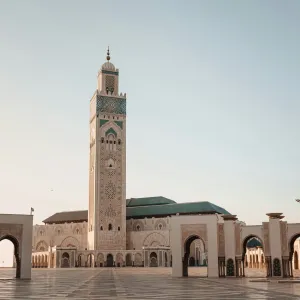
🕌 Stand at the edge of the Atlantic and look up at one of the largest mosques ever built.
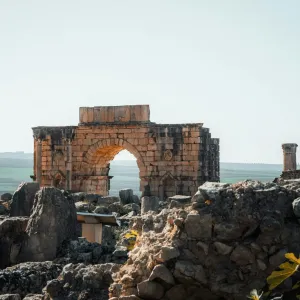
🏛️ Walk through Volubilis, where ancient Roman mosaics and marble arches rise out of the Moroccan countryside.
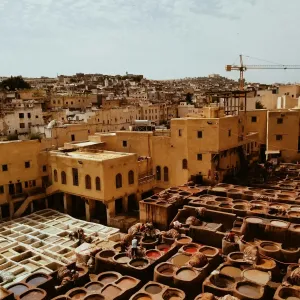
🏯 Step inside Fes el Bali, a medieval city where cars cannot enter and time stands still.
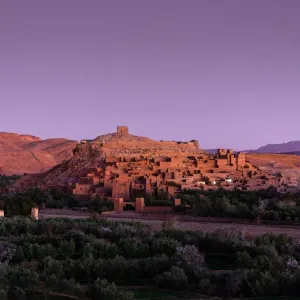
🌅 Wake before dawn and watch the towers of Aït Ben Haddou turn gold as the Saharan sun rises.

0 Reviews
  • Departure/Return Location
    Casablanca/Marrakech
  • Included
    Accommodation as described
    Ground transport
    Local Guide
    Meals according to the daily description
    Omaya Travel representitive
  • Not Included
    Activities as mentioned
    Entry fees for the mentioned sites
    Flights
    Insurance
    Meals not mentioned
    Single room supplement

Tour Plan

1
Arrival in Casablanca
Your journey begins the moment you land at Mohammed V International Airport. Flights arrive at different times, and that's fine. We coordinate around your group so everyone arrives on their own terms, and the adventure starts when you're ready. First stop: the Hassan II Mosque - rising straight out of the Atlantic, one of the largest mosques in the world and one of the very few open to non-Muslim visitors. From there, a slow walk along the Corniche as the sun drops toward the ocean. This is where Casablanca comes to life - locals, street food, sea breeze, no agenda. Your first real taste of Morocco at its own pace.
Traditional Riad in the heart of the city.
Breakfast
2
Casablanca - Rabat - Chefchaouen
The day starts in Rabat, Morocco's quiet, elegant capital. The Hassan Tower comes first - a 12th-century minaret frozen mid-construction, surrounded by hundreds of broken columns and centuries of history. Then it's on to the Kasbah of the Udayas, a fortified medina where whitewashed walls and bougainvillea-lined streets hang above the point where the river meets the Atlantic. After lunch, the group hits the road - a 5-hour drive north through the Rif Mountains, with the landscape changing the whole way up. Arrival in Chefchaouen comes as the evening light catches the famous blue alleyways.
Hotel in the heart of the blue city.
Breakfast
3
Chefchaouen
The morning starts with a guided walk through the blue medina - the best way to get your bearings in a city that was designed to make you pleasantly lost. Hidden squares, centuries-old walls, artisan workshops tucked behind unmarked doors. The afternoon is yours. Duck into a quiet alley, browse the relaxed shops, or follow the locals to Ras El-Ma - the mountain spring at the edge of town where ice-cold water flows year-round. For the adventurous, the hike up to the Spanish Mosque is worth every step, with one of the best sunset views in all of Morocco. As evening settles over the blue city, the group comes back together for a guided evening walk - when the alleyways empty out and Chefchaouen finally shows its quieter side.
Hotel in the heart of the blue city.
Breakfast
4
Chefchaouen - Fes
The day takes the group south, into the deep roots of Morocco's history. First stop: Volubilis - one of the best-preserved Roman ruins in North Africa. Walking through the ancient mosaics, marble arches and crumbling basilicas, it's hard not to feel the weight of what once stood here. A place that earns its time. From there, a stop in the imperial city of Meknes to take in the Bab El-Mansour gate - a monumental piece of Moroccan decorative architecture that stops you in your tracks, even on a short visit. By evening, the group rolls into Fes - Morocco's oldest imperial city and arguably its most layered. Two nights here. You'll need them.
Traditional Riad.
Breakfast
5
Fes
There is nowhere in Morocco - nowhere in the world - quite like Fes el Bali. A UNESCO-listed medieval city where cars cannot enter, the streets follow a 9th-century layout that has barely changed in over a thousand years. This morning, the group ventures deep inside with a guide who knows how to read it. The route winds through the famous Chouara Tanneries - a riot of colour and an assault on the senses (grab a sprig of fresh mint, you'll thank yourself later) - through the souks of the leather and brass workers, and to the grounds of Al Quaraouiyine, founded in 859 AD and recognised as the world's oldest continuously operating university. The afternoon is free. Wander, get lost, revisit a corner that caught your eye in the morning. Fes rewards the curious.
Traditional Riad.
Breakfast
6
Fes - Merzouga
A long drive south, but the road earns its keep. The first break comes in the Cedar Forest near Azrou, where a troop of wild Barbary macaques roam freely among the trees. They've grown comfortable around respectful visitors - a surprisingly intimate encounter in the middle of nowhere. Then the landscape takes over. Slowly, the mountain green gives way to desert ochre, the air dries out, and the horizon flattens. By the time Merzouga appears, the mood in the group has shifted. Just in time for sunset, everyone mounts a camel and heads into the Erg Chebbi dunes - the great sea of sand that marks Morocco's gateway to the Sahara. Tonight, a comfortable desert camp under a sky that reminds you how many stars there actually are.
Hotel in Merzouga.
Breakfast
7
Merzouga
This morning, the group heads to Khamlia, a small desert village known for its Gnawa heritage. Here, musicians welcome you with live Gnawa music - rhythmic, powerful and deeply rooted in the history of the region. It’s an atmospheric moment that adds another layer to the Sahara experience, beyond the dunes themselves. After the visit, the group returns to the desert camp. The afternoon is free to enjoy the dunes at your own pace - relax at camp, take in the silence of the desert, or simply watch the light shift across the sand. A second night at the camp, and another sky full of stars - the Milky Way arching overhead in one of the darkest places you'll find anywhere on earth.
Desert camp.
Breakfast, Lunch,Dinner
8
Merzouga - Boumalne Dades
The desert is behind you. Today, the landscape shifts again. The first stop is Todra Gorge - 300-metre sheer cliffs rising straight out of the earth, with a cold river running along the canyon floor. The best way through it is on foot, with the walls closing in on both sides. From there, the Dades Valley introduces one of Morocco's stranger sights - the so-called ""monkey fingers"", sandstone pillars eroded into shapes that look almost deliberately sculpted. The kind of landscape that makes you stop the car and just stare. Tonight, the group settles into a guesthouse in Boumalne Dades - a quiet base at the edge of the valley, with nothing urgent on the agenda.
Traditional Riad.
Breakfast
9
Dades Valley - Aït Ben Haddou
The drive west follows one of Morocco's great historic corridors - ancient fortified mud- brick kasbahs stretching across the pre-Saharan foothills, one after another, as far as the eye can see. A stop in Skoura to walk through its sprawling palm grove and explore the crumbling kasbahs half-swallowed by the landscape. On the road towards Tifoultoute, the group visits the Tawabil cooperative, a local initiative offering a closer look at traditional products, local know-how and community-based work in the region. Then a visit to the Atlas Film Studios in Ouarzazate - where the desert backdrops of countless epic productions were brought to life. Bigger and stranger than you'd expect. By afternoon, the group arrives at Aït Ben Haddou - well ahead of the day-trip crowds. A UNESCO World Heritage ksar that has stood here for centuries, and tonight, home. Accommodation is right inside the old village walls, in a kasbah-style guesthouse that makes it easy to forget what century you're in.
Traditional Riad.
Breakfast
10
Aït Ben Haddou - Marrakech
The alarm goes off before dawn. It's worth it. As the first light hits the ancient earthen towers of Aït Ben Haddou, the whole ksar turns gold. No day-trip crowds, no noise - just the group and one of those quietly extraordinary moments that only early risers ever get. After breakfast, the road climbs into the High Atlas Mountains via the Tizi n'Tichka pass - a winding, dramatic crossing through Berber villages and mountain scenery before the descent begins and the heat of the south rises up to meet you. By evening, Marrakech. The contrast after days in the desert and mountains is immediate and electric. The night is yours - if there's one recommendation, it's a rooftop drink above Djemaa el-Fna as the square below shifts into its nightly spectacle.
Traditional Riad.
Breakfast
11
Marrakech
A slower morning in the city. First, the Jardin Majorelle - the iconic cobalt-blue garden created by painter Jacques Majorelle and later brought back to life by Yves Saint Laurent. Then the Le Jardin Secret, tucked quietly inside the medina and somehow even more serene despite being steps from the busiest souks in Morocco. Lunch is at the Amal Women's Training Center - a social enterprise restaurant where the food is excellent and the proceeds support women from disadvantaged backgrounds. One of those places that feels good in every sense. The afternoon is entirely free. Lose yourself in the souks, book a hammam, or find a café and watch Marrakech do its thing.
Traditional Riad.
Breakfast
12
Departure
No agenda this morning. Sleep in, take a final walk through the souks, sit over a long breakfast in the medina, or head back to that one spot you've been thinking about since Day 3. Transfers to Marrakech Menara Airport are arranged around your flight. Everyone leaves at their own time. Bslama, Morocco. Until next time.
Breakfast  
Omaya – FAQ

Frequently Asked Questions

Our classic tours are open to everyone — solo travellers, couples, friends and families travelling together. They're the ideal choice if you want to share the experience with a mixed group of like-minded people from all walks of life, guided by our expert local teams at a pace that works for all.

Alongside our classic tours, we also offer two specialist formats. Our solo traveller tours are designed specifically for those exploring on their own — with small groups, a carefully considered pace, and a natural setting for meeting fellow independent travellers. Our women-only tours create a warm, supportive environment for women who want to experience Morocco with the freedom and confidence that comes from travelling in an all-female group.

Not sure which is right for you? Our team is happy to talk it through and help you find the best fit.

Riads are traditional Moroccan guesthouses built around a central courtyard — full of character, history and charm. Staying in one is an experience in itself, and a far more atmospheric alternative to a standard hotel.

A few practical things to keep in mind: due to their age and central locations, heating and air conditioning can be inconsistent, and thick traditional walls sometimes limit Wi-Fi signal to common areas rather than individual rooms — mobile data is a reliable backup. Most riads have two or three floors with no elevator, so be prepared to carry your luggage up stairs.

Morocco is a Muslim-majority country with a strong culture of modesty, and dressing respectfully goes a long way. For both men and women, keeping shoulders and knees covered is recommended — especially in rural areas, religious sites, and smaller towns.

Lightweight, loose-fitting layers work well and double up as protection from the sun. You don't need to overhaul your wardrobe — just pack with awareness and you'll feel comfortable wherever the itinerary takes you.

The trip involves a mix of walking, hiking and long drives. Some days — like exploring Fes el Bali or hiking up to the Spanish Mosque in Chefchaouen — require a reasonable level of fitness and comfort on uneven, cobbled surfaces. The camel trek into the Sahara is gentle and short.

Overall, a moderate level of fitness is recommended, but nothing on this itinerary requires athletic ability. If you have any specific concerns, speak to our team before booking and we'll give you an honest assessment.

Spring (March to May) and autumn (September to November) are the sweet spots — comfortable temperatures across the mountains, desert and cities. Summer in the Sahara can be extremely hot, and mountain passes can be affected by snow in winter.

We'll always advise on conditions closer to your travel date and let you know if anything is likely to affect the itinerary.

Citizens of many countries — including the EU, UK, USA and Canada — do not require a visa for stays of up to 90 days. Requirements vary by nationality, so we recommend checking with your local Moroccan embassy or consulate ahead of travel.

Your passport should also be valid for at least six months beyond your travel dates. Our team is happy to point you in the right direction if you're unsure.

Morocco's currency is the Moroccan Dirham (MAD). Cash is king for most day-to-day transactions — souks, street food, tipping and smaller guesthouses rarely accept cards. ATMs are widely available in cities, but scarcer in rural areas.

We recommend arriving with some local currency and withdrawing cash in Casablanca, Fes or Marrakech before heading south. Note that Dirhams cannot be exchanged outside Morocco, so avoid withdrawing more than you need towards the end of your trip.

It's best to stick to bottled or filtered water throughout the trip. This applies to brushing teeth in more rural areas as well. Bottled water is cheap and widely available everywhere on the route, so you'll never be far from a safe supply.

Haggling is a normal and expected part of shopping in Moroccan souks — it's a social exchange as much as a commercial one. A good rule of thumb: start at roughly half the asking price and meet somewhere in the middle.

Never feel pressured, and never start negotiating for something you aren't genuinely prepared to buy. Your guide will give you tips on the ground and can help if you're unsure whether a price is fair.

Tipping is customary in Morocco and genuinely appreciated. As a rough guide: restaurant meals 10–15% of the bill, local guides 50–100 MAD per day, drivers 20–50 MAD per day, and a small amount for anyone who assists with luggage or shows you around informally.

We'll provide a full tipping guide before departure so you can arrive feeling confident and prepared.

Morocco is widely considered one of the most welcoming and accessible destinations in North Africa, and millions of international visitors travel there safely every year. As with any destination, a degree of common sense goes a long way — keep an eye on your belongings in busy medinas, use recommended transport, and follow your guide's advice on the ground.

Our local team monitors conditions throughout and will always brief you before and during the trip. We also stay in close contact with the FCO and equivalent travel advisories and will proactively communicate any relevant updates.

No specific vaccinations are legally required for entry into Morocco from most countries, but it's always worth ensuring your routine vaccinations are up to date. Some travellers choose to get hepatitis A and typhoid cover as a precaution — your GP or a travel health clinic can advise based on your medical history.

We also recommend packing a basic travel health kit including sun protection, rehydration sachets, and any personal prescription medication. Pharmacies are well stocked in cities, but harder to find in rural areas.

Morocco is multilingual — Darija (Moroccan Arabic) and Tamazight (Berber) are the native languages, while French is widely spoken in cities, hotels and restaurants. English is increasingly common in tourist areas, and your Omaya guide will be with you throughout to bridge any gaps.

That said, knowing a few words of Arabic or French goes a long way and is always warmly received. A simple "shukran" (thank you) will earn you a smile almost anywhere.

Moroccan cuisine is one of the great joys of any visit — think tagines slow-cooked with aromatic spices, freshly baked bread, vibrant salads, and pastilla, the remarkable sweet-savoury pastry. Meals are generous, communal and deeply satisfying.

Vegetarian options are widely available and most dietary requirements can be accommodated with advance notice. Please let us know at the time of booking and we'll make sure the right arrangements are in place throughout the trip. Note that pork products and alcohol are not served in traditional Moroccan establishments, though international hotels may offer both.

You don't have permission to register